

WHAT MAKES A CAR a classic? That's the question that a friend asked the other day at a classic car show. He has no particular interest in old vehicles, bar a general appreciation that vintage and classic cars are interesting to look at. Like many outsiders, he is puzzled by the fact that ordinary, run-of-the-mill cars are exhibited at such events.
What was so special about a Mark 3 Cortina, he wondered, that justified its presence in such (otherwise) august company.
He'd used a Mk 3 as a company car in the early seventies, and didn't hold a good opinion of the model. It wasn't a patch, he claimed, upon the Mk 2. In fact, he'd hated it - its looks, its sloppy handling and general road behaviour. And if the car was horrible when it was new, was it going to be any better now, just because it twenty years older? I have to admit that his views coincide with my own - the Mk 3 Cortina, I'd suggest, is a prime example of 'grey porridge'. A car that has no discernable attraction to the enthusiastic driver.
When the VSCC came up with the idea of 'Vintage' cars, a particular cut-off date was chosen, which coincided with the demise of several high-class manufacturers due to the 1929 stock market crash. In the Club's opinion, the cheapened, Americanised models of the next decade were inferior in several respects. However, it was accepted that certain makers had not dropped their standards; so, although the term 'Vintage' was rigidly fixed to a specific period in time, some later cars were deemed to be post-vintage 'Thoroughbreds'. This, of course, was a selection made entirely upon the merits of the vehicle in question. No 'grey porridge' included here!
But what is a 'Classic' car? There is, of course, no precise definition. Is it a car of a certain age, or of a certain character? If we take the usual, 'over 21' rule that's enforced by many organisers, it just means 'an old car'. Any old car. So every car ever made will become a classic if it survives long enough. Yet the dictionary definition of the word talks about 'standards of agreed excellence'. In other words, something better than the ordinary; and if the word 'classic' is to mean anything when applied to cars, we surely have to be selective?
People who argue against any form of selection often point to the Austin 7 - who would have thought that the humble, baby Austin could ever attract such an enthusiastic following, they ask? In fact, though, it always did! Examples were successfully raced and trialled from the very start; it might have been the butt of music-hall jokes, yet its remarkable qualities were never in doubt. The Austin 7 also changed a nation's motoring habits, and deserved classic status for that achievement alone. But should the contemporary Carden Monocar be regarded as anything more than a temporary aberration? Is is 'classic' in anything other than its lethal simplicity? (That doesn't mean that Cardens shouldn't be preserved, of course - we need to see how dreadful they were in order to believe it.)
A 'classic' doesn't have to boast sporting victories - though such accomplishments might justify automatic inclusion. It doesn't have to be expensive, but expensive cars will probably predominate; they're usually nicer to drive, and to own, simply because their workmanship is better. And that's just a fact of life - it explains why more Aston Martins have survived than Ford Pilots. One possible definition of a classic might be: 'A model that engendered marque loyalty while it was in production and which was actively sought after, subsequently, by enthusiasts.'
Having already upset Cortina Mk 3 owners, let me now infuriate Farina fans by indicating why I think these BMC barges don't deserve classic status. The B-series Farina models introduced wholesale badge engineering, and should be damned for that alone. But, in each case, the Farina model was demonstrably worse than the model it succeeded. And less attractive. Beauty may be in the eye of the beholder, but some excellent Gerald Palmer designs were ditched in favour of Farina's re-hashed Peugeot 404 3-box bodyshell.
Here are a few figures for the Mk 1 and Mk 2 (Farina) Cambridges.
| Austin A55 Mk1 | Austin A55 Mk 2 | |
| Max speed | 80mph | 76mph |
| 0-60 time | 22secs | 24.5secs |
| Mpg at 60 mph | 31.5mpg | 28mpg |
According to the road tests, the A55 Farina also had poorer brakes and no extra legroom (despite being nearly a foot longer - the additional length was all in the front overhang). Was it worth this catalogue of crassness for an extra 2 inches of internal width?
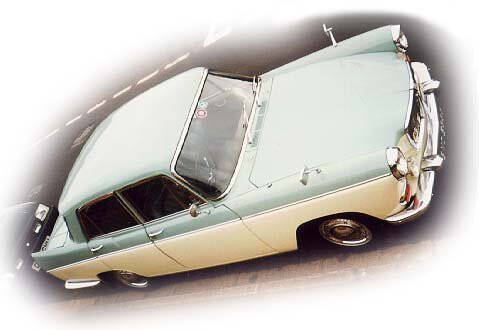 That's just the Austin - the least sporting of the group. When it came to the MG version, marque enthusiasts were in tears at the loss of the lovely ZB Magnette. The Motor said of the Mk3 (Farina) Magnette, "The nature of the car as a whole ... does not really engender enthusiasm for fast driving." By the standards of the day, this was journalist-speak for, "It's an appalling car - you'll loathe it". Ironically, MG's slogan was "Safety, Fast".
Should we look more kindly on such vehicles, and start calling them classics, simply because they've avoided the crusher?
David Landers
 What is YOUR opinion on this controversial subject? Is David right - or is he being unfair? Just what makes a car deserve classic status? E-mail your views to us at
 Back to Archive Main Page
 Comments, letters, suggestions; post your E-mail to; The Editor, Classic Motor Monthly,
 Snail-mail; Classic Motor Monthly, PO Box 129, Bolton, BL3 4YQ, Lancashire, United Kingdom.
 Tel (01204) 657212; International +44 1204 657212
  Fax (01204) 62479; International +44 1204 62479