Making New Friends After Gambling Recovery, One Step at a Time
 Save
If you're wondering how to make friends during gambling recovery, the honest answer is: slowly, and in places that have nothing to do with gambling. Many of the old friendships built around betting shops, poker nights or online chat rooms don't survive once gambling stops, and that gap can feel sudden and lonely. The good news is that new connections are entirely possible once you know where to look and how to pace yourself. Classic Motor has put together this guide to help you rebuild a social circle that supports the life you're trying to live now.
Starting from where you are
You don't need a packed social calendar to start recovering socially, you just need one new place to show up. For many people, gambling filled hours that now feel empty, and that emptiness is often mistaken for a sign that something is wrong with you rather than a sign that you have space to fill. Give yourself credit for noticing the gap. Noticing it is the first step towards closing it with something steadier.
It helps to think of friendship-building as a skill you're relearning, not a personality trait you either have or lack. Early attempts will feel clumsy. That's normal, and it passes faster than you'd expect once you've had a few small wins.
Choosing places that don't pull you backwards
Not every social setting is equally safe while you're rebuilding. Pubs with betting machines, sports bars screening constant odds coverage, or online gaming forums that drift into betting talk can quietly undo the distance you've worked to create. This doesn't mean withdrawing from the world, it means being selective about where you spend your early social energy.
A useful question before joining any group: does this place or activity put me near triggers, meaning the people, sounds or settings that make gambling feel tempting again? If the answer is yes, it's worth looking elsewhere first, at least until your footing feels steadier.
Finding people who share something other than gambling
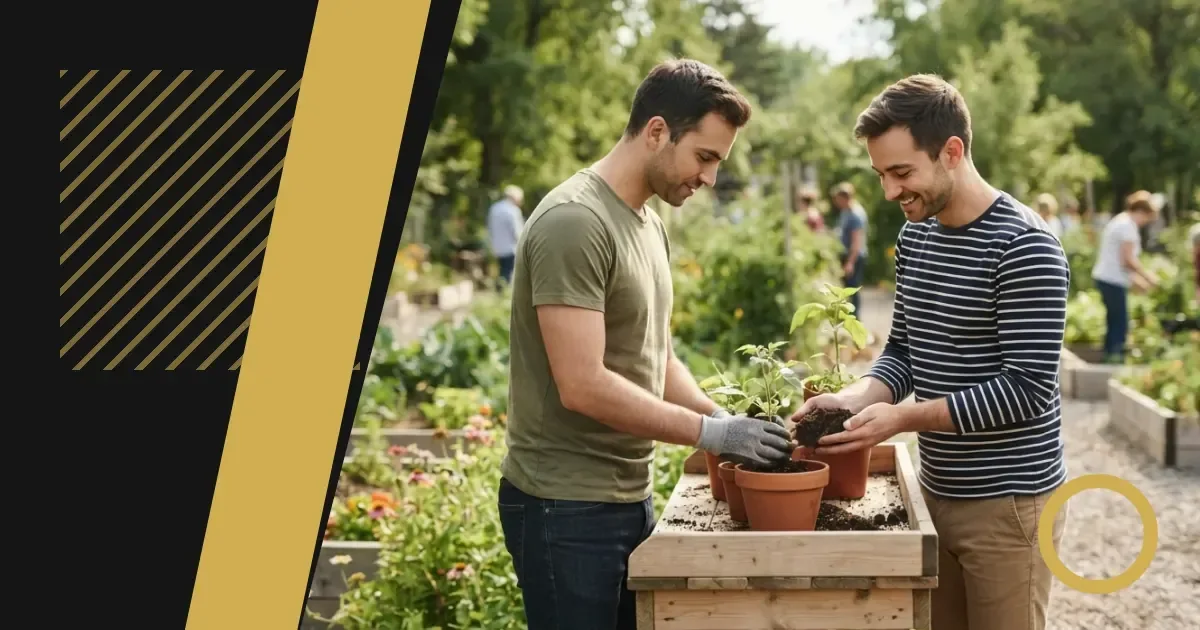
Shared activity is a far easier route into friendship than shared conversation alone. A walking group, an allotment, a choir, a repair café or a local history society all give you something to do together, which takes the pressure off making small talk from a standing start. The activity carries the friendship until the friendship can carry itself.
If you're not sure where to start, reading about joining community groups with a gambling history is a good next step, since it covers how to choose a group and what to say about your background if it comes up.
Joining before you feel ready
Waiting until you "feel sociable" can delay things indefinitely, because confidence tends to follow action rather than come before it. The ordinary approach that works for most people is to pick one thing and commit to attending more than once before judging it.
- Pick one group, class or regular activity that has nothing to do with gambling.
- Go once with no expectation beyond showing up.
- Go a second time even if the first felt awkward.
- Say yes to one small invitation, a coffee or a lift home, when it's offered.
- Give it a fair run before deciding whether it's for you.
- If it isn't, try a different setting rather than stopping altogether.
Handling the awkward early conversations
You will almost certainly be asked, at some point, why you're free in the evenings, or why you don't drink, or what you used to do for fun. You don't owe anyone a full account of your gambling history. A short, honest answer such as "I'm making some changes to how I spend my time" is usually enough, and most people won't push further.
If dishonesty about gambling has been part of your pattern, it's worth thinking about how you talk about your past more broadly. The article on stopping lying about gambling looks at this in more depth, including how to be truthful without over-explaining to people who don't need the full story.
Dealing with setbacks without giving up on connection
Loneliness doesn't disappear the moment you join a new group, and some weeks will still feel flat. That's a normal part of rebuilding, not proof that it isn't working. Keep showing up even when a particular week feels unrewarding, because the value of a routine often only becomes clear after several weeks, not after one.
If isolation is weighing on you more heavily than usual, the guide on dealing with loneliness in gambling recovery offers more specific ways to work through it, and the piece on filling evenings without gambling can help with the practical side of long, quiet hours.
Knowing when the urge to withdraw is a warning sign
Pulling away from new friendships, cancelling plans repeatedly, or feeling drawn back towards old gambling settings are worth paying attention to. These aren't failures, they're signals that something needs support, whether that's rest, a conversation with someone you trust, or outside help.
- You've started avoiding a group you were enjoying, without a clear reason.
- Thoughts about gambling have become more frequent or harder to push aside.
- You're rehearsing excuses to visit old gambling environments "just to look".
- You feel more comfortable isolating than reaching out, even when invited.
Getting support alongside new friendships
New friendships work best alongside structured support, not instead of it. GamCare runs the National Gambling Helpline on 0808 8020 133, free and available 24 hours a day, and can point you towards mutual aid groups where you'll meet people who understand the recovery process from the inside. BeGambleAware (begambleaware.org) offers further information and support, and GamStop (gamstop.co.uk) lets you self-exclude from gambling sites licensed in Great Britain if that's a tool you still need.
If gambling has ever involved a shared device at home, blocking software such as Gamban or BetBlocker can add a layer of protection while you build your new routine. All of this is for people aged 18+, and reaching out for support alongside new friendships is a sign of strength, not weakness.
#Loneliness #Hobbies #Peer support #Triggers
Frequently asked questions
How long does it usually take to make new friends after gambling recovery?
There's no fixed timeline, and it varies from person to person. What matters more than speed is consistency, showing up to the same activity or group repeatedly tends to build connection faster than trying many different things once.
What should I say if new friends ask why I don't drink or gamble with them?
A brief, honest answer such as saying you're making changes to how you spend your time is usually enough. You don't need to share your full history unless you want to.
Is it possible to socialise without gambling if most of my old friends still gamble?
Yes, though it often means building a separate social circle around activities that have nothing to do with gambling, such as a class, a club or a volunteering group. Keeping some distance from gambling-heavy settings while you do this makes the process easier.